
Field Notes
Do Solar Panels Need Professional Cleaning in the Portland Area?
· 7 min read · solar cleaning, maintenance, portland
Pollen, mineral film, and organic grime build up on Portland-area solar panels faster than rain can rinse them. Here is what that costs you in output, why DIY rinsing falls short, and how often cleaning actually makes sense.
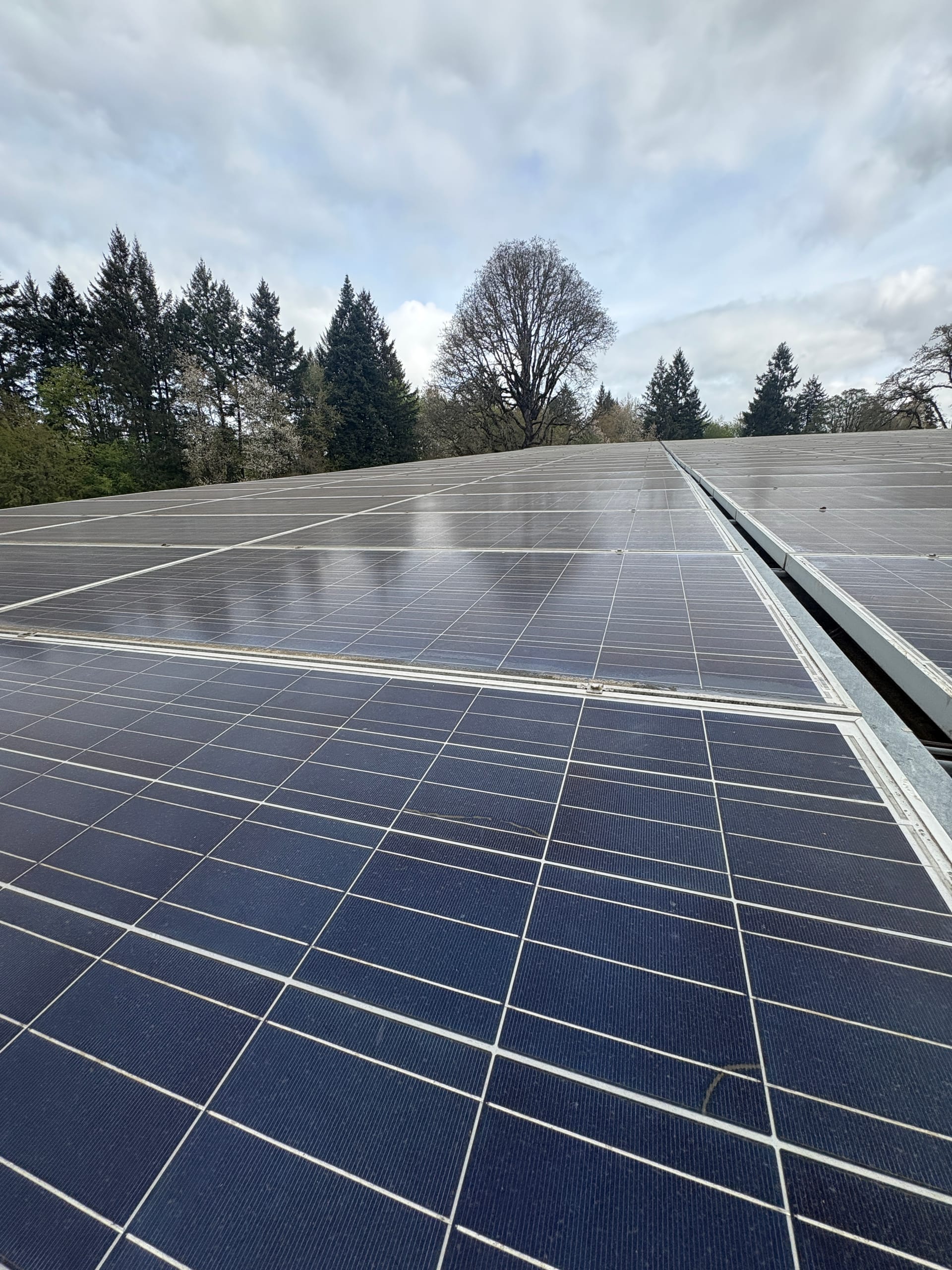
Owen gets this question almost every week: do solar panels really need to be cleaned, or is that just an upsell dreamed up by people who clean solar panels for a living? It's a fair thing to ask. Here's the honest answer based on what we actually see on rooftops across Sherwood and the greater Portland metro.
What Actually Builds Up on a Panel
Panels in this region don't deal with desert dust so much as they deal with moisture, pollen, and organic grime that sticks once it's wet. Portland's wet winters leave a thin film of mineral residue after every rain, and spring brings a wave of fir and alder pollen that settles into a yellow-green haze on anything facing up. Add road film if you're near a highway, or leaf litter and sap if there are mature trees nearby, and you get a buildup that regular rain simply doesn't rinse away on its own. Rain is good at moving loose dust. It's not good at breaking down a bonded layer of pollen and mineral deposits that's been baking in the sun for weeks.
That layer matters because solar panels generate power from direct sunlight hitting the cells. Even a light haze scatters and blocks some of that light before it ever reaches the silicon. The dirtier the panel, the harder your system has to work to produce the same output, and in a lot of cases it just doesn't get there.
The Energy Loss Argument
This is where professional cleaning earns its keep rather than being a nice-to-have. A system that's been losing a percentage or two of output every month for a full pollen season adds up over a year, especially on a system you sized specifically to cover your usage. Homeowners often don't notice the drop because it happens gradually, panel by panel, through spring and into summer. Then they look at their production numbers in July and wonder why output seems flat compared to the panel's rated capacity. A cleaning, done with the right equipment, is usually the simplest fix available.
For commercial sites the math gets bigger fast. An array with hundreds or thousands of panels loses proportionally more total energy to the same thin layer of grime, and those losses show up directly in a business's energy bill or in how much a ground-mount or tracker system is actually contributing toward a facility's power needs. That's part of why larger arrays benefit from documented, scheduled service rather than a one-time wipe-down whenever someone happens to notice.
Why DIY Cleaning Often Falls Short
A garden hose knocks off loose dust but does nothing for bonded pollen film, and a pressure washer can crack a panel's seal or void a manufacturer's warranty if it's aimed wrong. Regular tap water also leaves its own mineral spots behind as it dries, which means a DIY rinse can actually add a new layer of haze even while removing the old one. That's the whole reason we use a de-ionized water system with soft brushes instead of standard hose water: it rinses clean and dries without streaking, which keeps the glass clear instead of trading one film for another.
There's also the roof-access problem. Most residential arrays sit at an angle, on a roof, often two stories up, and cleaning them safely with the right brush pressure isn't something most people want to attempt on a ladder with a bucket. We've had more than one customer tell us they tried the hose-and-squeegee approach once and decided it wasn't worth the risk for a result that didn't really move the needle on output anyway.
What a Professional Cleaning Actually Involves
Our approach on residential systems uses specialized soft brushes paired with de-ionized water, which leaves panels spotless and streak-free without any chemicals or abrasive scrubbing that could scratch the glass. On commercial and larger installations, we work on rooftop, ground-mount, and tracker arrays up to 2,700 panels, and every job comes with before-and-after photo documentation plus a full report so facility managers have a record of exactly what was done.
Every cleaning also includes a visual inspection as part of the service, covered under our inspection and maintenance program. That's not just a courtesy. A technician standing in front of every panel on your roof is in a good position to spot a loose connector, a cracked cell, or a mounting issue before it turns into a bigger repair. Catching that kind of thing early is worth more than the cleaning itself in some cases.
One spring we had a regular in Sherwood whose array sits under a stand of fir trees, and by late April the panels had gone from slate blue to a dull yellow-green from pollen alone. After the cleaning, the owner sent us a photo of the production monitor showing the jump in daily output within a day of the visit. It's one of the clearer before-and-after examples we've seen, and it's exactly the kind of pollen-heavy setup where a semiannual plan makes more sense than waiting a full year between visits.
How Often Cleaning Actually Makes Sense
For most homes without heavy tree cover, an annual plan timed before pollen season is enough to keep output where it should be and keep the system ahead of spring buildup. Homes near busy roads, under trees, or close to agricultural dust are better served by a semiannual plan with two visits a year, since those sites accumulate grime faster and lose more ground between cleanings. There's no single right answer here. It depends on your roof's exposure, what's growing or driving nearby, and how much you care about squeezing maximum output out of the system you paid for. If you're not sure which category you fall into, it's worth asking rather than guessing.
We also handle window cleaning using the same de-ionized water system, which a fair number of solar customers add on since the crew and equipment are already on site. If you're doing exterior work on your home at the same time, like siding repair or gutter work, we also work with Rip City Construction and can point you in their direction if that's part of what you're tackling this season.
Getting a Straight Answer for Your System
The honest answer to whether your panels need professional cleaning depends on where they sit, what's around them, and how long it's been since the last visit. A free written quote is the easiest way to find out, since a technician can look at your actual roof and tree line rather than guessing from averages. That's true whether you're in Sherwood, further into Portland, or anywhere else across the metro we serve.
FAQ
Does rain clean solar panels well enough on its own?
Rain removes loose dust but doesn't break down bonded pollen film or mineral deposits that build up over weeks of sun exposure. Those bonded layers keep blocking sunlight until something actually scrubs them off.
How much energy can dirty panels actually lose?
The loss varies by location and season, but a gradual buildup through spring pollen season can measurably cut into daily output well before most homeowners notice the panels look dull. Checking your production numbers against the panel's rated capacity is the clearest way to tell.
Is pressure washing a safe way to clean panels myself?
Pressure washers can crack seals or void manufacturer warranties, and regular tap water tends to leave its own mineral spotting as it dries. A de-ionized water system with soft brushes avoids both problems and is the standard professional crews use.
How often should a Portland-area homeowner schedule cleaning?
Most homes without heavy tree cover do fine with one cleaning a year timed before pollen season ramps up. Homes near highways, trees, or heavy dust usually benefit more from a semiannual plan with two visits.